Transit Accessibility Sucks
For the past 4 years at the University of Toronto (minus the years of lockdowns) I have commuted all over Toronto, via bus, trains, and street cars, regardless if they are TTC, Viva or The Go.
As a commuter, I have come across inaccessibility DAILY. It was the first thing I noticed when I began taking the TTC back in 2019 in my first year of university. At first, I was impressed by the fact that Line 1 and Line 4 had screens on the subway in which announcements of stops would scroll across. I also appreciated that the trains would have a “blinking map system” in which the map of all of the stops would display which stops we passed (red), which stops we had yet to arrive at (green) and which stops we were arriving at (blinking yellow). Visual accessibility was the only way I was able to get a hang of navigating this underground system of trains as easily as I did despite the fact I couldn’t always hear the intercom announcing the next stop.
However, none of this was apparent when I switched to Line 2. The Danforth -Bloor Line still uses the old train models from who knows when. They still rely on audio to know which stop you are at. This just forces me to pay attention to the windows and watch out for the name of the station to show up on the walls as we zoom past at full speed. But sometimes I daze off, or I’m just a tad bit sleepy. Out of all of the lines, this one, in particular, is the one where I am most likely to miss my stop and have to turn around because I can’t hear the announcement.
I won’t say that Line 1 and Line 4 are the standard of peak accessibility because they still have their issues. But they are certainly much better than Line 2.
Then there is The Go train system. Which is marketed as this high-tech, fancy and cleaner option than the TTC for commuters who live in the GTA. I like The GO. I don’t like that it is expensive. But I do like that it is hassle-free, above ground and there is wifi (sometimes).
However, The GO’s accessibility is still problematic: Do not get me wrong, it does have an accessibility car. However, there is only one accessible car. A small car that is to serve wheelchair users, parents with strollers, elderly persons with walkers, individuals with crutches, canes, guide dogs, people with suitcases, and people like me — Individuals who need a screen to know which stop they are at, or at least be close to the conductor to tell them when it is time to get off. Because there is only one car that has these qualities, it gets crowded easily. Individuals who really need to be there have no choice but sit in the many inaccessible cars that fill up the rest of the train.
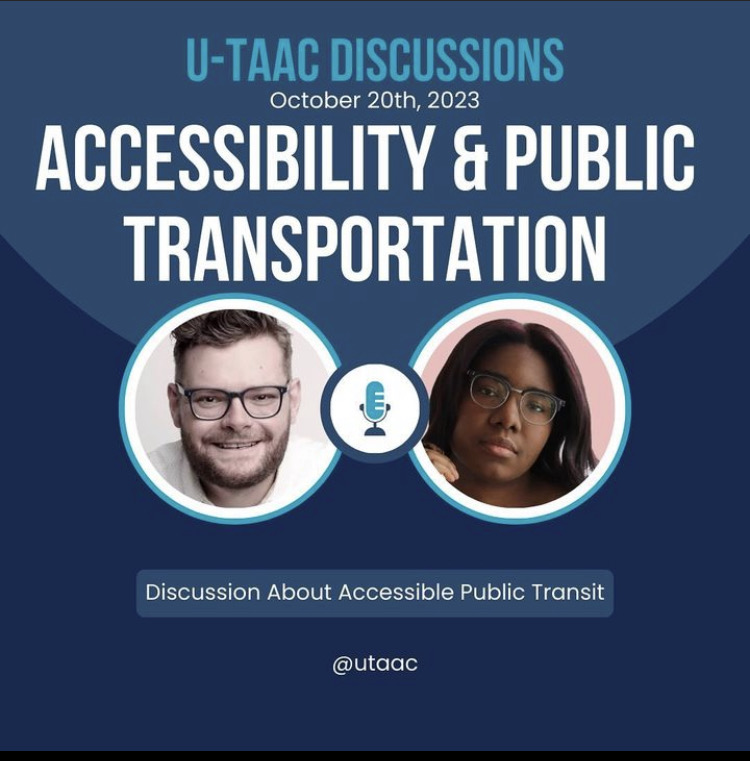
Accessibility & Public Transportation Discussion
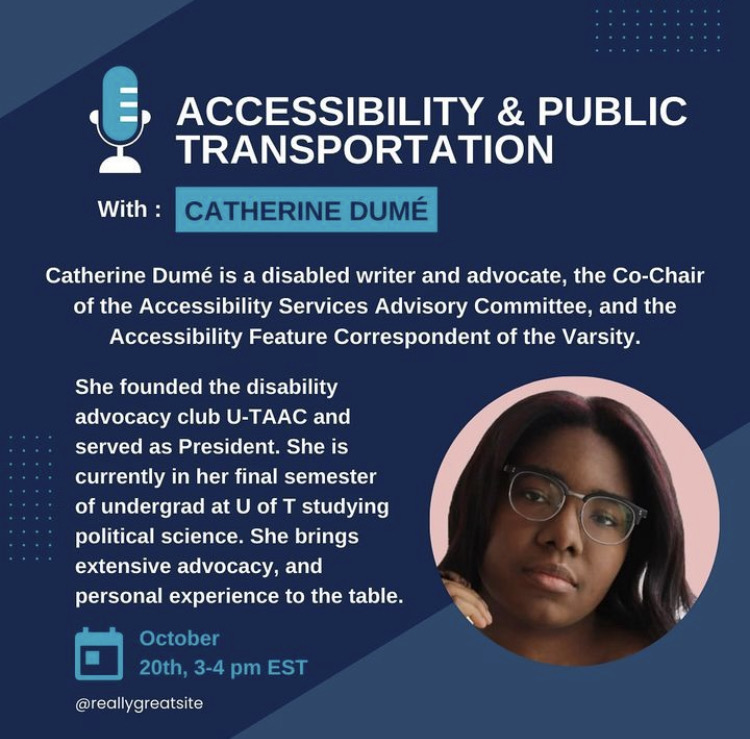
I could talk forever on this topic, which is why I was super excited to facilitate the University of Toronto’s Accessibility Awareness Club (U-TAAC)’s first discussion on Accessible Public Transportation.
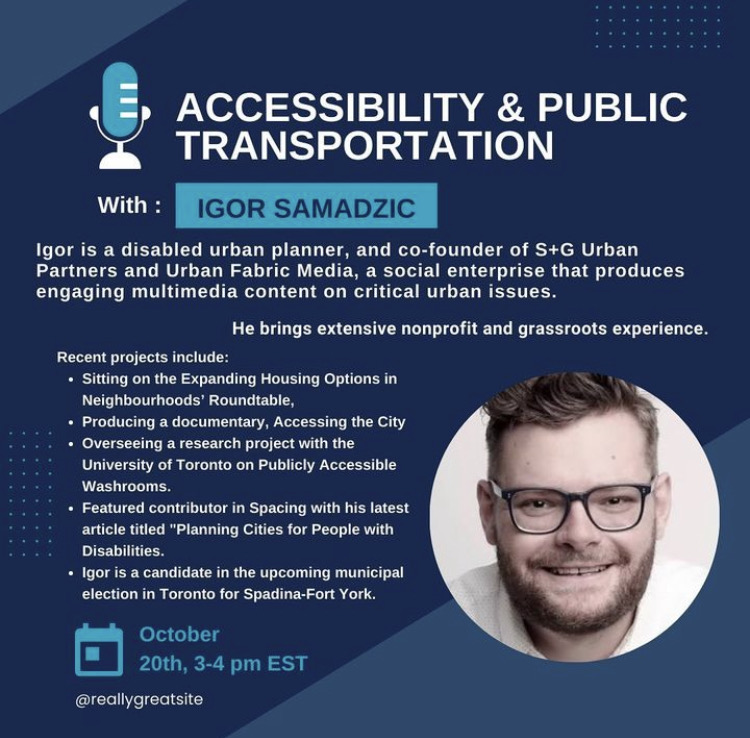
However, I felt that despite my personal experience, I could not talk about accessible transit without inviting Urban Planner and accessibility advocate Igor Samardzic. When I first heard of Igor, I was told he was another U of T student advocate who cared a lot about physical accessibility. Now he has made it his career, becoming an expert for the City of Toronto and ensuring policies regarding accessibility serve persons with disabilities.
It is an honour to have brought back this trailblazer of an alumni back to U of T, so that he may inspire a new generation of accessibility advocates.
In this discussion, we talked about: the steps of making a city accessible, what elements to include when we consider making our transit system accessible, the difficulties of making TTC stations and subway trains accessible, problems with internal train/bus/streetcar design, the pros and cons of Toronto’s brand new Family of Services accessible transit program, the issue of hyper-focusing on physical disabilities than invisible ones for accessibility, how homelessness architecture feed into inaccessibility and how Toronto compare to other cities in terms of accessibility.
 Catherine CC Dumé
Leave a comment